
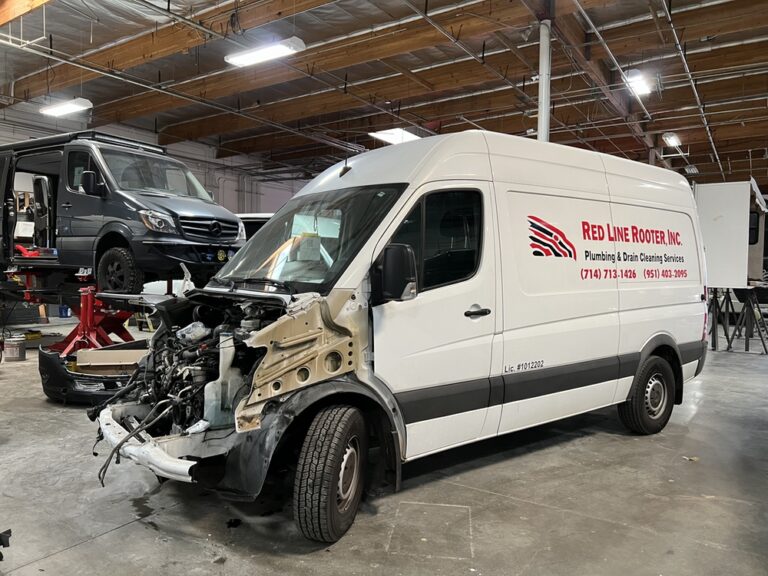
Sprinter van collision repair becomes essential when accidents leave subtle yet dangerous issues in your Mercedes Sprinter van. Many owners in Southern California experience minor bumps on busy roads, only to discover problems later. This comprehensive guide explores the 7 signs your Sprinter van has hidden collision damage, helping you identify risks early and understand professional solutions.
You’re navigating traffic in Orange County, perhaps near Yorba Linda or along the 91 Freeway, when a quick stop causes a rear-end tap. The exterior appears okay, but something feels different afterward. Owners often ask: what are signs of hidden damage in Sprinter van? Or how do I know if my Sprinter has hidden damage after an accident? These questions arise frequently because even low-impact events can affect the van’s aluminum frame, high-roof structure, or advanced systems.
Hidden damage builds quietly, creating safety concerns or performance drops. For commercial users delivering in Irvine or families traveling from Huntington Beach, ignoring clues leads to bigger repairs. National Highway Traffic Safety Administration data shows rear-end collisions make up nearly 29% of all crashes, many hiding structural issues. Spotting signs early prevents escalation, restoring vehicle integrity.
Many feel overwhelmed wondering is my Sprinter safe after minor collision. You’re not alone—owners across Anaheim, Santa Ana, and beyond share this concern. Recognizing patterns brings relief, empowering informed decisions. Professional assessments uncover what eyes miss, ensuring peace on the road. For those searching sprinter van collision repair near me, understanding these indicators guides better choices.
The unique design of Mercedes Sprinter vans, including extended wheelbases and high-roof options, makes them susceptible to concealed problems. Commercial fleets in Riverside or personal vans in Laguna Niguel face similar challenges. Early detection through routine checks or expert evaluations saves time and protects investment.
Let’s examine these signs closely to equip you with knowledge for confident driving.
What Is Sprinter Van Collision Repair and Why It’s Important
Sprinter van collision repair restores vehicles to pre-accident condition using specialized methods like frame straightening, ADAS recalibration, and OEM parts replacement. It addresses visible and hidden damages from impacts, crucial for maintaining safety in Mercedes-Benz Sprinter models with complex aluminum bodies and electronic systems. In traffic-heavy Southern California, these repairs prevent long-term complications.
The process begins with detailed diagnostics to detect concealed issues, followed by precise structural work and system testing. Certified technicians follow manufacturer guidelines to preserve warranties and performance. Without proper repair, minor accidents lead to alignment problems or sensor failures over time.
Industry insights from the Insurance Institute for Highway Safety indicate advanced systems reduce crashes when functioning correctly. For fleet operators or personal users, timely intervention minimizes downtime and costs.
Expert sprinter van collision repair delivers reliable outcomes, combining technical precision with vehicle-specific knowledge. Owners benefit from restored handling and efficiency.
Understanding the importance encourages proactive steps after any incident.
Contact a specialist for a complimentary consultation to explore your van’s needs or learn more about Sprinter van repair.
Sign 1: Misaligned Doors or Sliding Mechanisms in Your Sprinter Van
Misaligned doors or sliding mechanisms serve as an early warning of hidden collision damage in Sprinter van, resulting from frame shifts that disrupt the vehicle’s precise engineering. This issue appears commonly after low-speed impacts on congested roads in Orange County or Los Angeles. Professional sprinter van collision repair corrects these through accurate measurements and adjustments.
The Sprinter’s design relies on tight tolerances for cargo and passenger doors, especially in high-roof models. Even minor force transfers during accidents can bend tracks subtly. Rear-end collisions, accounting for nearly 29% of crashes per NHTSA statistics, often cause this without obvious exterior signs. Commercial vans face heightened risk from frequent stops.
In daily use, misalignment creates operational challenges for businesses in Fullerton or Costa Mesa.
Why Doors Stick After a Collision
Force from impacts warps hinges or frames. In commercial vans used for deliveries in areas like Fullerton, this affects daily operations significantly.
Energy from the collision travels through the structure, altering alignment points that are not always visible externally. Aluminum material bends rather than dents visibly.
High-roof configurations amplify the effect due to taller leverage points.
Passenger models experience similar problems with side doors.
Common Causes in Rear-End Accidents
Low-speed bumps twist alignments, affecting seals.
The bumper’s energy absorption directs stress to door frames. Chain reactions occur in extended models.
Impact on Daily Use for Commercial Operators
Sticking reduces efficiency, adding frustration during loading in busy spots like Costa Mesa.
Time lost translates to reduced productivity for fleets. Security concerns arise from poor sealing.
How to Spot It Early
Notice resistance or gaps around edges. Uneven closing indicates underlying problems.
Regular checks after any incident help catch this phase early. Compare door operation to pre-accident behavior.
Listen for unusual sounds during opening.
Test all doors systematically.
Visual Inspection Tips
Check seams with light; inconsistencies reveal shifts.
Compare both sides for symmetry. Look for paint cracks near hinges.
When to Seek Professional Help
Persistent issues suggest broader structural alignment needs.
Delays can worsen damage. Certified diagnostics provide certainty.
Long-Term Risks of Ignoring This Sign
Moisture entry causes rust, compromising insulation and increasing repair complexity.
Electrical components near doors may suffer over time. Safety reduces from improper latching.
Resale value drops noticeably.
Certified repairs using advanced tools restore smooth operation, easing concerns about security and weather protection with durable results. Owners regain full functionality.
Contact a specialist for a complimentary door functionality assessment or view Sprinter van body panel replacement.
Sign 2: Uneven Tire Wear or Pulling to One Side
Uneven tire wear or pulling to one side highlights hidden collision damage in Sprinter van, often from suspension misalignment or bent components after impacts. This affects stability on Southern California highways, where consistent handling matters. Sprinter van collision repair includes precision alignments to resolve these.
Collisions disrupt wheel geometry, leading to irregular patterns in tires. The Insurance Institute for Highway Safety notes such issues in many post-accident vehicles. For high-mileage Sprinters in commercial service across Riverside or San Bernardino, this accelerates expenses. Owners notice higher replacement frequency.
Fleet managers in Fontana or Ontario report this as a common post-accident complaint.
Causes of Tire Wear After an Accident
Axle or frame bends cause scrubbing, common in 4×4 variants.
Force from the crash alters suspension angles. Subtle shifts accumulate over miles.
High cargo loads exacerbate wear patterns.
Extended wheelbase models show pronounced effects.
Role of Frame Straightening
Restores even distribution, preventing premature replacement.
Specialized equipment ensures accuracy. Process returns factory specifications.
Connection to Wheel Alignment Services
Integrates checks for optimal contact.
Post-repair verification is standard. Laser technology improves precision.
DIY Checks for Pulling Issues
Drive straight; drift signals misalignment.
Test on level surfaces for best results. Hands-off steering reveals tendencies.
Monitor over distance.
Compare to normal behavior.
Tools Needed for Basic Inspection
Simple gauge reveals pressure differences.
Visual tread examination helps. Depth measurements indicate unevenness.
Limits of At-Home Detection
Internal damage requires equipment.
Professional scans find root causes. Avoids guesswork.
Safety Implications for Fleet Vehicles
Heightens risks on long routes.
Can lead to secondary incidents. Tire blowouts increase in severe cases.
Regulatory compliance suffers.
Professional services provide thorough resolution, reducing worries about control with verified techniques. Handling returns to optimal levels.
Contact for a complimentary alignment review or explore RV alignment repair near me.
Sign 3: Unusual Noises or Vibrations During Operation
Unusual noises or vibrations indicate hidden collision damage in Sprinter van, pointing to displaced parts or chassis weaknesses. These emerge gradually after accidents, noticeable on varied terrain in Ventura County or Inland Empire.
Aluminum construction transmits sounds differently, masking origins. Reports suggest auditory clues in significant hidden damage cases. Owners in Chatsworth or Encino often report these first.
High-roof vans amplify transmission due to larger panels.
Types of Noises to Listen For
Rattles from panels or exhaust.
Consistent patterns suggest specific sources. Low-frequency hums indicate chassis issues.
Squeaks from suspension common.
Clunks during turns point to mounts.
High-Roof Specific Vibrations
Overhead areas resonate easily.
Taller structures amplify effects. Wind noise increases.
Chassis-Related Sounds
Grinding from bends.
Low-frequency hums common. Metal fatigue contributes.
When Vibrations Signal Serious Damage
Constant during speed changes.
Indicates deeper structural concerns. Steering wheel shake warns drivers.
Whole-vehicle tremor suggests major shifts.
Acceleration worsens symptoms.
Link to Electrical Systems
Affects wiring integrity.
Can trigger warnings. Loose harnesses develop.
Diagnostic Processes for Noises
Advanced listening tools pinpoint.
Systematic elimination finds causes. Road tests replicate conditions.
Lift inspections reveal loose parts.
Scanning complements auditory checks.
Step-by-Step Inspection
Starts with test drive.
Followed by lift examination. Component tightening tested.
Targeted repairs eliminate disturbances, restoring quiet comfort. Daily drives become enjoyable again.
Contact for a complimentary vibration check or see RV maintenance.
Sign 4: Leaking Fluids or Dashboard Warning Lights
Leaking fluids or dashboard warning lights reveal hidden collision damage in Sprinter van to vital lines or electronics. Impacts compress areas, causing slow drips or alerts. Common in undercarriage zones across models.
Owners in Glendale or Pasadena notice spots under parked vans. Warning clusters illuminate unexpectedly.
Common Fluid Leaks Post-Collision
Coolant or brake from pressure.
Gradual loss often starts small. Transmission fluid joins list.
Power steering leaks affect handling.
Fuel lines rarely but critically.
Identifying Brake System Damage
Visible puddles underneath.
Soft pedal feel accompanies. Color identifies type.
Engine Oil Leaks
Dark traces indicate seals.
Low levels trigger alerts. Burning smell possible.
Meaning of Warning Lights
Triggers from disruptions.
Multiple lights suggest broader issues. ABS or traction control common.
Battery icons from alternator strain.
Engine management lights frequent.
ADAS-Related Indicators
Sensor faults appear.
Require specific recalibration. Lane assist disables.
Risks of Delayed Repairs
Escalate to major failures, with costs varying widely.
Safety systems compromise quickly. Roadside breakdowns rise.
Environmental hazards from leaks.
Detailed examinations prevent progression. Regular monitoring helps.
Contact for a complimentary fluid and light review or check RV electrical repair upgrade in OC.
Sign 5: Difficulty Accessing Hood, Trunk, or Roof
Difficulty accessing hood, trunk, or roof points to hidden collision damage in Sprinter van bends affecting latches. Common in varied impacts across configurations.
Owners in Seal Beach or Dana Point struggle with stubborn mechanisms.
Hood Latch Problems After Crashes
Resistance from misalignment.
Front structure shifts cause it. Cable stretch occurs.
Safety release affected.
Engine bay access hindered.
Common in Front-End Collisions
Force alters positions.
Bumper deformation contributes. Radiator support moves.
Trunk and Cargo Door Issues
Affects secure closing.
Rear frame twists responsible. Latch striker misaligns.
Power doors fail.
Loading becomes cumbersome.
Impact on Loading Efficiency
Slows workflows.
Increases daily frustration. Fleet productivity drops.
Roof Access Challenges in High Models
Restricts maintenance.
Dents block mechanisms. Ladder racks affected.
Solar panel access limited.
Repairs ensure seamless use. Full functionality returns.
Contact for a complimentary access inspection.
Sign 6: Electrical or ADAS System Malfunctions
Electrical or ADAS malfunctions stem from hidden collision damage in Sprinter van wiring or sensor shifts. Essential for modern safety features in current models.
Owners in Culver City or Monterey Park experience intermittent failures.
Signs of Wiring Damage
Intermittent functions.
Flickering components common. Power windows slow.
Infotainment glitches.
Starting issues develop.
Battery and Charging System Checks
Post-impact strains.
Connections loosen. Alternator load increases.
ADAS Recalibration Necessity
Restores accuracy.
Prevents false alerts. Camera alignment critical.
Radar sensors reposition.
Braking assistance recovers.
OEM Standards Compliance
Maintains features.
Ensures warranty coverage. Factory protocols followed.
Long-Term Electrical Risks
Broader failures.
Costly module replacements. Corrosion from exposed wires.
Fire hazards rare but possible.
Proper handling sustains technology. Full system integrity returns.
Contact for a complimentary ADAS assessment.
Sign 7: Reduced Fuel Efficiency or Handling Instability
Reduced fuel efficiency or handling instability reflects hidden collision damage in Sprinter van altering aerodynamics. Impacts change frame shape subtly.
Owners in Palm Desert or Indio track higher consumption.
Fuel Economy Drops Explained
Higher resistance.
Altered panel alignment. Increased rolling resistance.
Engine works harder.
MPG drops noticeably.
Monitoring Techniques
Observe changes.
Compare pre-accident levels. Use trip computer data.
Handling Instability Causes
Imbalanced weight.
Suspension shifts. Steering response dulls.
Cornering feels uncertain.
High-speed stability suffers.
Road Test Indicators
Sway on turns.
Uneven response. Wind sensitivity increases.
Preventing Further Deterioration
Prompt corrections.
Regular monitoring helps. Adjustments restore balance.
Optimizations improve operation. Efficiency returns gradually.
Contact for a complimentary efficiency evaluation or discover why Sprinter van maintenance is critical.
Our 6 Step Sprinter Van Collision Repair Process: What to Expect
Professional sprinter van collision repair follows proven steps for complete restoration and customer satisfaction.
Step 1: Initial Inspection
Scans detect all damage.
Advanced tools used. Thorough documentation created.
Hidden issues revealed.
Customer walkthrough included.
Step 2: Estimate and Approval
Detailed quotes.
Transparent breakdown. Insurance coordination offered.
Options explained clearly.
Approval secures timeline.
Step 3: Disassembly and Repair
Precise work.
OEM components. Frame corrections performed.
Structural integrity prioritized.
Sub-assemblies addressed.
Step 4: Painting and Reassembly
Matching finishes.
Quality control. Multiple coats applied.
Detailing completed.
Seals renewed.
Step 5: Quality Testing
Verifications.
Road tests. System checks run.
Alignment confirmed.
Functionality validated.
Step 6: Delivery with Warranty
Assurance provided.
Full handover. Follow-up scheduled.
Customer satisfaction verified.
This ensures quality outcomes every time.
Common Concerns About Sprinter Van Collision Repair And How We Solve Them
Concerns about sprinter van collision repair include timelines, outcomes, and unexpected expenses.
Cost Transparency Issues
Clear breakdowns.
Upfront details. No hidden fees.
Range discussions early.
Payment options available.
Budget-Friendly Options
Flexible approaches.
Insurance coordination. Prioritized repairs possible.
Turnaround Time Worries
Streamlined scheduling.
Prioritized service. Updates provided.
Minimal disruption aimed.
Express options discussed.
Rental Coordination
Keeps you mobile.
Partner arrangements. Seamless transition.
Quality and Warranty Doubts
Comprehensive coverage.
Certified methods. Lifetime on select work.
Follow-up inspections.
Customer feedback valued.
Certification Assurance
I-CAR standards.
Mercedes guidelines. Trained specialists.
Solutions build confidence with proven approaches.
“Excellent handling of my Sprinter’s issues—highly recommend!” – Customer from Garden Grove.
Areas We Serve Throughout Southern California
Sprinter van collision repair near me covers extensive areas including Orange County cities such as Anaheim, Santa Ana, Irvine, Huntington Beach, Garden Grove, Fullerton, Orange, Costa Mesa, Mission Viejo, Westminster, Newport Beach, Buena Park, Lake Forest, Tustin, Yorba Linda, Fountain Valley, Laguna Niguel, San Clemente, La Habra, Cypress, Rancho Santa Margarita, Seal Beach, Placentia, Brea, Stanton, San Juan Capistrano, Laguna Hills, Laguna Beach, Aliso Viejo, Villa Park, Laguna Woods, Dana Point, Los Alamitos, La Palma, and many more across Los Angeles County, Inland Empire, Ventura County, and San Diego County regions—accessible via major routes.
Local presence ensures quick response for residents and businesses alike.
From coastal communities to inland valleys, comprehensive service reaches all.
We Can Help! Contact Us Today
Noticing these signs shifts emotions from fear of vulnerability to empowerment through action. Logical expertise in certified processes justifies choosing professionals who deliver lasting safety and performance, yielding strong returns on investment.
Imagine driving without doubt—systems functioning, efficiency restored. That relief comes from trusted repairs turning worry into confidence.
“My van runs better than before—thank you!” – Owner from Newport Beach.
“Quick resolution of hidden issues—excellent service!” – Manager from Corona fleet.
“Restored my confidence on the road!” – Driver from Laguna Niguel.
You’re ready to move forward confidently with a vehicle you trust completely.
If you’re seeking professional sprinter van collision repair in Southern California, our team stands ready. Certified experts handle frame repair, ADAS recalibration, paintless dent removal, and more. Whether commercial fleet, mobile business, or personal use, precision care applies. Located near the 91 Freeway, serving wide areas. Complimentary consultation available. Decades of experience and satisfaction guarantee ensure reliability. Restore your Sprinter today!
Contact us now at 23281 La Palma Ave. Yorba Linda CA 92887 or call (714) 909-1444.
| Aspect | OCRV Center | Typical Shop |
|---|---|---|
| Turnaround Time | 1-2 weeks average | 3-6 weeks |
| Cost Transparency | Full upfront quotes | Often add-ons |
| Guarantee | Lifetime on select work | Limited |
| Certification | I-CAR & Mercedes | Basic |
| Customer Satisfaction | 200+ 5-star reviews | Variable |
Frequently Asked Questions About Sprinter Van Collision Repair
What are signs of frame damage in Sprinter van?
Frame damage manifests as pulling, noises, misalignment, or instability. Professional scans detect bends accurately, preventing safety risks and further wear. Early RV frame repair near me restores integrity.
How much does Sprinter collision repair cost?
Costs typically range $4,000-$35,000 depending on damage extent, parts, and labor. Factors include structural work or ADAS needs. Transparent estimates help planning with RV collision repair budget in SoCal.
Is my Sprinter safe after minor collision?
Minor collisions can hide issues affecting safety. Thorough inspection confirms integrity before resuming use. Certified checks provide certainty through RV inspection near me.
Where to get certified Sprinter collision repair?
Certified centers in Southern California provide OEM-compliant services for reliable outcomes. Local expertise ensures proper handling with Sprinter collision repair shop.
Can minor accidents cause hidden Sprinter damage?
Yes, minor impacts often conceal structural or system problems, per industry reports. Diagnostics reveal truth. Professional evaluation prevents escalation via RV collision repair checklist.
How long does Sprinter body repair take?
Usually 1-2 weeks, varying with complexity and parts availability. Efficient processes minimize downtime. Updates keep owners informed during Sprinter van body repair in OC.
Does insurance cover Sprinter ADAS recalibration?
Most policies include it as essential safety restoration. Direct billing simplifies claims. Coverage details vary but support common through insurance claim tips for RV body damage.
What is Mercedes certified collision program?
It ensures repairs meet manufacturer standards using genuine parts and trained technicians. Compliance maintains warranty and performance. Certified shops follow protocols precisely with Mercedes Sprinter van roof repair body shop.
How to check Sprinter for accident history?
Professional diagnostics and reports reveal past damages effectively. Visual plus scanning provides complete picture. History checks complement current inspections via RV repair near me.
Why choose certified shop for Sprinter repair?
Certification guarantees compliance, warranty preservation, and expert handling. Proper tools and training ensure quality. Long-term reliability improves through best Sprinter van repair shop in SoCal.
Read more about oem parts replacement.